

How To Clean Echo Pb 580 Screen Arrestor
Like any other operating system, GNU/Linux has implemented retentivity management efficiently and even more than that. Merely if any procedure is eating away your memory and you want to clear information technology, Linux provides a fashion to flush or clear ram cache.
- Find Top 15 Processes past Memory Usage in Linux
- Discover Elevation Running Processes by Highest Memory and CPU Usage in Linux
- How to Limit Time and Retention Usage of Processes in Linux
How to Clear Cache in Linux?
Every Linux System has 3 options to articulate enshroud without interrupting any processes or services.
one. Articulate PageCache only.
# sync; repeat 1 > /proc/sys/vm/drop_caches
ii. Clear dentries and inodes.
# sync; echo ii > /proc/sys/vm/drop_caches
3. Clear pagecache, dentries, and inodes.
# sync; echo iii > /proc/sys/vm/drop_caches
Explanation of the in a higher place command.
sync will flush the file system buffer. Command Separated by ";" run sequentially. The shell waits for each command to terminate before executing the next command in the sequence. As mentioned in the kernel documentation, writing to drop_cache will clean cache without killing any application/service, control echo is doing the job of writing to file.
If y'all have to clear the disk enshroud, the first command is safest in enterprise and production as "...repeat i > …." will clear the PageCache only. Information technology is not recommended to utilize the third option in a higher place "...echo 3 >" in product until you know what y'all are doing, as information technology volition clear pagecache, dentries, and inodes.
Is it a good idea to free Buffer and Cache in Linux that might exist used by Linux Kernel?
Complimentary Buffer and Cache in Linux
When you are applying diverse settings and desire to check, if it is really implemented particularly on the I/O-extensive benchmark, then y'all may need to clear the buffer cache. You can drop cache as explained above without rebooting the System i.due east., no downtime required.
Linux is designed in such a manner that it looks into the disk cache before looking onto the disk. If it finds the resource in the cache, then the request doesn't reach the deejay. If we clean the cache, the disk cache will exist less useful as the Os will look for the resource on the disk.
Moreover, it volition also irksome the system for a few seconds while the cache is cleaned and every resources required past OS is loaded again in the disk cache.
Now nosotros will exist creating a trounce script to machine clear RAM enshroud daily at ii am via a cron scheduler task. Create a beat out script clearcache.sh and add the following lines.
#!/bin/bash # Note, nosotros are using "echo iii", merely it is not recommended in production instead use "echo 1" echo "echo 3 > /proc/sys/vm/drop_caches"
Set execute permission on the clearcache.sh file.
# chmod 755 clearcache.sh
Now you may call the script whenever you are required to clear the ram cache.
Now set a cron to clear RAM cache every twenty-four hour period at 2 am. Open crontab for editing.
# crontab -e
Append the below line, save and go out to run information technology at 2 am daily.
0 2 * * * /path/to/clearcache.sh
For more than details on how to cron a job, you lot may like to bank check our article on 11 Cron Scheduling Jobs.
Is it a good thought to motorcar clear the RAM enshroud on the product server?
Articulate RAM Cache on Linux Production Server?
No! it is not. Recollect of a situation when you have scheduled the script to clear ram cache every day at 2 am. Every solar day at two am the script is executed and it flushes your RAM cache. I day for any reason may be more expected users are online on your website and seeking resource from your server.
At the same fourth dimension, the scheduled script runs and clears everything in the cache. At present all the users are fetching data from the disk. It will consequence in a server crash and corrupt the database. So clear ram-enshroud only when required, and known your footsteps, else you are a Cargo Cult Organisation Administrator.
How to Clear Swap Infinite in Linux?
If you lot want to clear Swap space, you may like to run the beneath control.
# swapoff -a && swapon -a
Also, y'all may add the to a higher place command to a cron script higher up, afterward understanding all the associated risks.
Now we will be combining both in a higher place commands into ane single command to brand a proper script to clear RAM Enshroud and Swap Space.
# echo 3 > /proc/sys/vm/drop_caches && swapoff -a && swapon -a && printf '\n%southward\n' 'Ram-cache and Swap Cleared' OR $ su -c "repeat 3 >'/proc/sys/vm/drop_caches' && swapoff -a && swapon -a && printf '\n%due south\n' 'Ram-enshroud and Swap Cleared'" root
Later on testing both the higher up commands, we will run the command "free -h" before and after running the script and will check the cache.
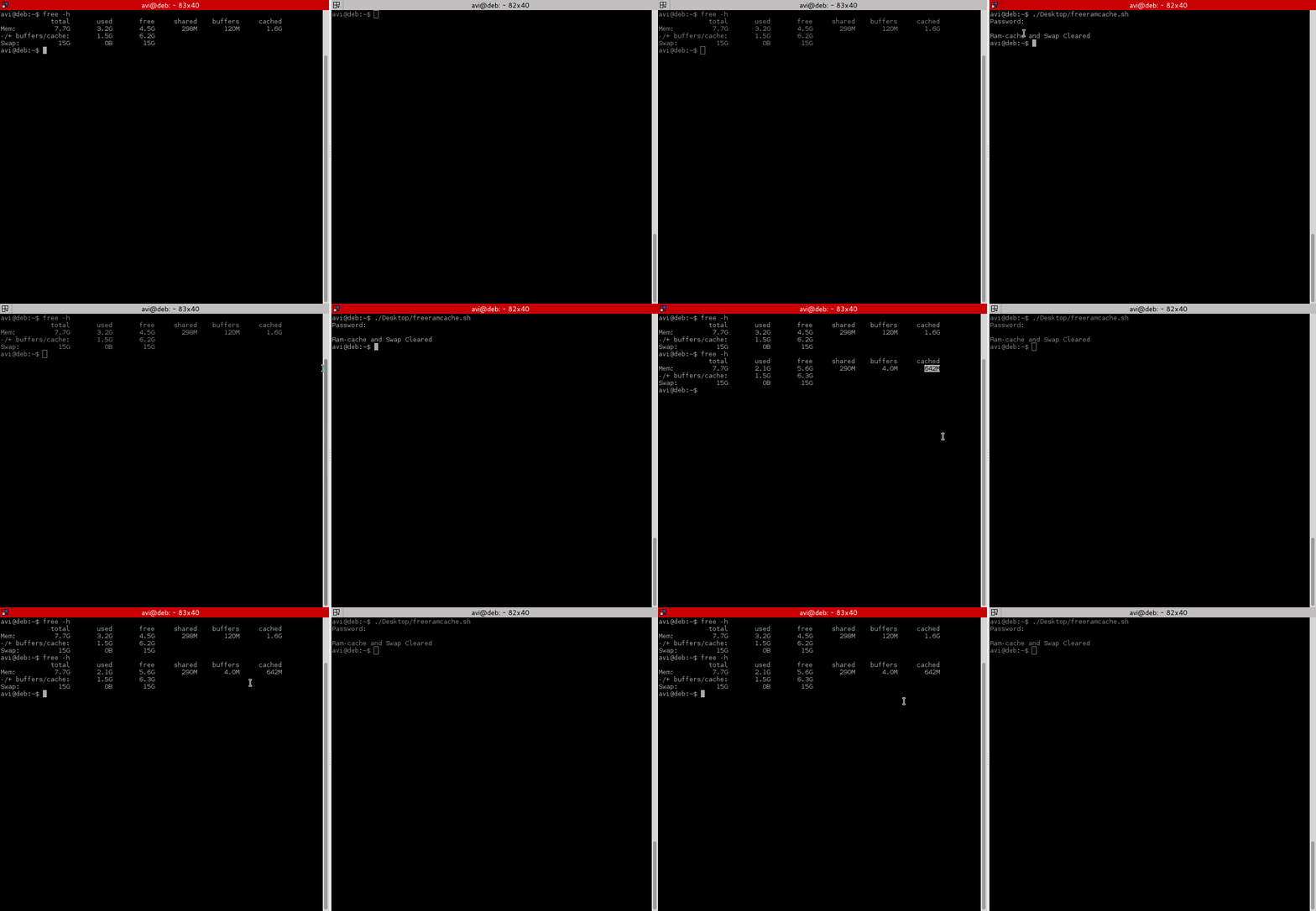
That'south all for at present, if you liked the article, don't forget to provide us with your valuable feedback in the comments to let us know, what yous think is a adept idea to articulate ram cache and buffer in product and Enterprise?
If You Appreciate What Nosotros Practice Hither On TecMint, You Should Consider:
TecMint is the fastest growing and most trusted customs site for whatever kind of Linux Articles, Guides and Books on the spider web. Millions of people visit TecMint! to search or browse the thousands of published articles available FREELY to all.
If you lot like what you are reading, delight consider buying us a coffee ( or 2 ) as a token of appreciation.

Nosotros are thankful for your never ending support.

Source: https://www.tecmint.com/clear-ram-memory-cache-buffer-and-swap-space-on-linux/
Posted by: mcbridefarretionly.blogspot.com
0 Response to "How To Clean Echo Pb 580 Screen Arrestor"
Post a Comment